Prickly Typeface Review: A Bold Display Font for Modern Branding
I was staring at a blank InDesign document, trying to crack the visual code for a boutique skincare brand called "Root & Thorn." The client wanted something that felt organic but undeniably sharp—a paradox that usually kills my creative momentum. I had already tested three geometric sans-serifs and two classic serifs, but nothing stuck. They felt either too corporate or too traditional. Then, I dragged Prickly into the layout. It wasn’t just another font; it was an immediate shift in energy. This captivating display font combines strength and elegance in a way that instantly commanded attention on the digital canvas. With its unique letterforms and a touch of mystery, this charming font turned a stagnant concept into a compelling direction within minutes.
Why Prickly Works Best for Bold Logo Design Concepts
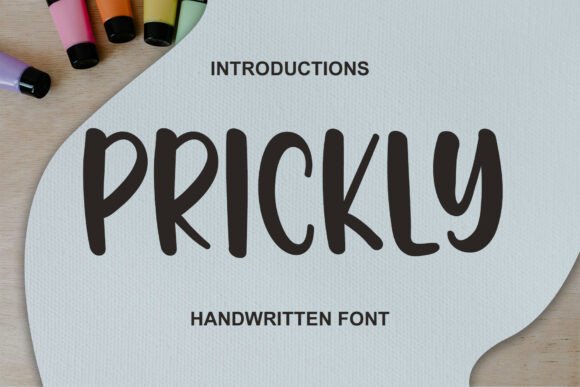
When evaluating Prickly for logo design, the first thing you notice is how the typeface handles weight and contrast. Unlike many modern display fonts that rely on uniform thickness, Prickly has a distinct character curve—literally and figuratively. In our Root & Thorn project, I used it as the primary logotype. The letters didn’t just sit there; they leaned into each other with a sense of motion and tension. For graphic designers looking for a creative font that can serve as the anchor of a brand identity, Prickly offers that rare balance of readability and artistic flair.
The font’s structure allows it to hold up well even when scaled down to a favicon size, which is a common pain point with decorative typefaces. However, its true power shines in large-scale applications. Whether you are designing a storefront sign or a large-format poster, Prickly delivers an eye-catching presence without feeling cluttered. It avoids the trap of being "too cute" or "too aggressive," landing squarely in the sophisticated territory that high-end brands crave. If you are building a brand identity for a lifestyle product, fashion label, or artisanal good, starting your logo exploration with this display font is a strategic move.
Prickly for Packaging Design and Product Labels
Packaging design requires typography that can communicate value at a glance. On a shelf crowded with competing products, your label needs to stop the scroll—or the walk. I placed a mockup of a small amber glass bottle with a Prickly label next to generic competitors, and the difference was stark. The font’s unique letterforms created a visual rhythm that drew the eye directly to the product name. Because Prickly is a display font, it naturally creates visual hierarchy, allowing secondary information like ingredients or volume to recede slightly while keeping the brand name dominant.
This font is particularly effective for packaging that wants to convey craftsmanship or exclusivity. The slight irregularity in the strokes gives it a handmade feel, which resonates strongly with consumers buying from small businesses or indie creators. When testing fonts for labels, always consider how they interact with textures. On matte paper or textured cardstock, Prickly’s edges remain crisp enough to be legible but soft enough to blend with the material’s organic nature. It bridges the gap between digital precision and analog charm, making it a versatile choice for physical design assets.
Prickly in Web Design and Social Media Graphics
Moving from print to screen, the behavior of Prickly remains consistent and impactful. In web design, hero sections are prime real estate for capturing user interest. I experimented with using Prickly for the main headline on a landing page. The font’s bold weight provided excellent contrast against a clean white background, ensuring immediate readability without requiring excessive sizing. It proved that a premium font doesn’t need to be complex to be effective; sometimes, strong form is all you need.
For social media graphics, where content moves fast, Prickly acts as a powerful hook. Instagram posts and Pinterest pins benefit from typography that stands out in a dense feed. I used it for quote cards and promotional banners, finding that it added a layer of editorial polish that simple sans-serifs lacked. The font pairs beautifully with minimalist imagery, letting the text carry the emotional weight of the message. For marketers and content creators who need to maintain a cohesive brand voice across platforms, having a distinctive headline font like Prickly ensures instant recognition. It transforms standard layouts into branded experiences.
Prickly for Editorial Design and Print Collateral
While Prickly excels as a headline font, its application extends to broader editorial design projects. I tested it in a multi-page brochure layout, using it for pull quotes and section headers. The font’s mysterious undertones added a narrative quality to the text, making even dry content feel more engaging. It works exceptionally well for magazines, lookbooks, or event programs where atmosphere matters as much as information. The key here is restraint. Using Prickly sparingly—as an accent font rather than body text—maximizes its impact. It draws the reader’s eye to specific points, guiding them through the design with intention.
When considering font pairing for these larger projects, Prickly plays well with both serif and sans-serif typefaces. A clean, neutral sans-serif provides a stable foundation that lets Prickly shine as the star. Conversely, pairing it with a delicate serif can create a romantic, vintage-inspired aesthetic suitable for wedding invitations or luxury stationery. The versatility of this display font means it can adapt to various modern typography systems, provided you respect its status as a statement piece.
Limitations and Practical Testing Advice
No single typeface is a silver bullet, and Prickly is no exception. Its defining characteristic—its unique, stylized forms—makes it unsuitable for long-form body text. Attempting to set paragraphs in Prickly would result in poor readability and viewer fatigue. It is strictly a display font, intended for short phrases, titles, logos, and accents. Additionally, while it performs well at medium sizes, extremely small text (under 8pt) may lose some of its nuanced details, so careful kerning and scaling are essential.
Before committing to Prickly for a final client project, I highly recommend creating a comprehensive brand board. Test the font in black and white, then with color overlays. Check how it interacts with different materials if printing is involved. Look closely at the ligatures and alternates if available; these subtle features often make the difference between a good design and a great one. Also, verify the file formats included in the download to ensure compatibility with your preferred software. Finally, always review the commercial font licensing terms carefully. Understanding whether you can use the font for merchandise, unlimited digital impressions, or client deliverables will save you from legal headaches later. Prickly is a powerful tool in the designer’s arsenal, but like any sharp instrument, it requires skillful handling to achieve the best results.