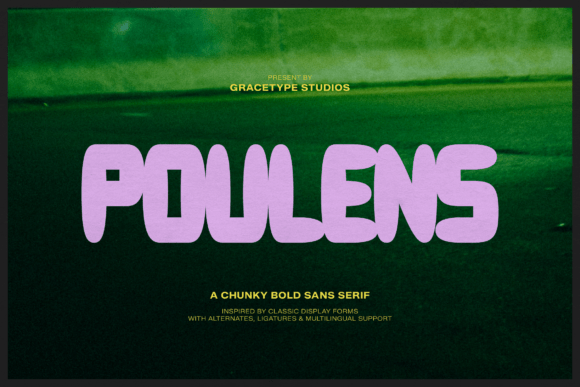
Poulens Typeface: Bold Display Fonts for High-Impact Web Design
I was staring at a blank hero section on a new landing page, trying to break the monotony of standard sans-serif headers. The layout felt safe but forgettable. I needed something that commanded attention immediately without requiring JavaScript animations or heavy video backgrounds to do the work. That’s when I decided to test Poulens, a chunky, bold sans serif display inspired by classic display forms. Within minutes of dropping it into my design tool, the entire hierarchy of the page shifted. This Poulens typeface features thick, heavy strokes that immediately attract attention, making it perfect for impactful headlines where you need to stop the scroll.
As a web designer, choosing a font is rarely just about aesthetics; it is about function and user experience. When I integrated Poulens into a recent project for a boutique online store, I quickly realized how much weight (literally) a good display font carries in digital spaces. It isn’t just a decorative choice; it is a strategic tool for visual hierarchy. Below, I’ll walk through how this specific typeface performs in real-world web layouts, from mobile responsiveness to brand consistency.
Why Poulens Works as a Primary Display Font for Landing Pages
The first thing you notice with Poulens is its sheer presence. In the world of Fonts, there are thousands of options, but few offer this specific combination of retro charm and modern boldness. For a product landing page, your headline has less than three seconds to communicate value. Using a thin or delicate typeface often forces users to squint or pause, creating friction. Poulens eliminates that friction. Its substantial letterforms act as visual anchors, guiding the eye directly to the core message.
I tested this on a campaign page for a digital course creator. The subject matter was dense, so the typography needed to be light and airy to balance the text density. However, the main hook needed punch. By using Poulens for the primary headline, we created an immediate contrast with the lighter body copy. This distinction helped users scan the page faster. They could instantly identify what was important versus what was supporting detail. This clarity is crucial for conversion because it reduces cognitive load. When visitors don’t have to work hard to understand the layout, they stay longer.
Impactful Headlines for E-Commerce and Product Launches
E-commerce sites live and die by their visual appeal. A Display font like Poulens can transform a generic product banner into a premium editorial piece. I applied this font to a "New Arrival" section for a fashion retailer. Instead of using a standard grid of images with small captions, we used Poulens for oversized text overlaid on high-quality imagery. The thick strokes held up beautifully against complex background photos, provided the contrast was managed correctly.
This approach works particularly well for limited-time offers or seasonal sales. The urgency implied by the bold, heavy nature of the font subconsciously signals importance. It tells the user, "Look here, this matters." Unlike script fonts or handwritten styles that can feel casual or niche, Poulens feels established and confident. It bridges the gap between playful and professional, making it versatile enough for lifestyle brands, tech startups, or creative agencies.
Readability Challenges and Mobile Optimization Strategies
While Poulens is stunning at large sizes, no web designer should use a display font blindly across all screen sizes. One of the biggest mistakes I see is applying heavy display fonts to navigation menus or small button text. On mobile devices, screen real estate is precious. If you use Poulens for a paragraph or even a subheading, it can overwhelm the content and make the site feel cluttered and slow to read.
In my testing, I found that Poulens excels in hero sections, section dividers, and large call-to-action labels. For body copy, I always pair it with a clean, neutral sans-serif font. This creates a balanced typographic scale. The rule of thumb I follow is: if the text requires more than two lines, switch to a more readable typeface. Poulens is designed for impact, not endurance. Keeping the heavy strokes reserved for short phrases ensures that the user’s eyes rest comfortably rather than fatiguing from the visual noise.
- Hero Sections: Ideal for 40px–80px headlines where the font’s character shines.
- Buttons: Effective for primary CTAs (e.g., "Buy Now") due to high visibility, but avoid for secondary links.
- Body Copy: Not recommended. Use a simple sans-serif or serif for paragraphs to maintain readability.
- Navigation: Generally too heavy for top-level menus; consider using it only for logo treatment.
Ensuring Clarity on Small Screens
When designing for mobile, I always check the line height and letter spacing. With a chunky font, default settings can sometimes cause letters to touch or overlap, especially on narrower viewports. I adjust the tracking slightly to give the heavy strokes room to breathe. This subtle tweak prevents the text from looking like a solid black block. Additionally, ensuring sufficient contrast between the font color and the background is critical. Dark gray on white or off-white works best. Pure black can sometimes be too harsh against such thick strokes, so I often soften the hex code to add a touch of elegance.
Font Pairing and Building a Cohesive Digital Brand Identity
A single font cannot build a brand identity alone. To make Poulens truly effective, it needs a partner. Because Poulens is so dominant, the pairing font must be understated. I frequently pair it with geometric sans-serifs like Inter, Roboto, or Helvetica Neue. These fonts share a modern sensibility but lack the decorative weight of Poulens, allowing them to recede into the background while the display font takes center stage.
For a more editorial or sophisticated look, such as a blog redesign or a luxury portfolio, I might pair Poulens with a classic serif font. The contrast between the modern, chunky display form and the traditional serifs creates a dynamic tension that feels curated and high-end. This combination is excellent for storytelling pages where you want to evoke trust and authority. The serif adds credibility, while Poulens adds excitement.
When selecting these pairs, consider the mood you want to convey. Poulens brings energy and boldness. If your brand is about calm and minimalism, use Poulens sparingly—perhaps only in the logo or one key headline per page. If your brand is loud, energetic, and disruptive, you can afford to use it more liberally across banners and promotional graphics.
Technical Considerations for Web Implementation
Before committing to Poulens for a client project, I always verify the technical specs. Ensure the font family includes multiple weights if available, though Poulens is primarily known for its bold display variants. Check for webfont availability in WOFF2 format for optimal loading speeds. Large display fonts can sometimes increase page load times if not optimized, so compressing the files is essential for maintaining good Core Web Vitals scores.
Also, review the licensing terms carefully. As a commercial font, using Poulens on a public-facing website usually requires a web license. Make sure your agreement covers the number of monthly page views or unique visitors, especially if you are using it for a high-traffic e-commerce platform. Proper licensing protects your business and respects the type designer’s work, which is a cornerstone of ethical digital design.
Final Integration Tips for Digital Creators
Incorporating Poulens into your workflow is about restraint and intention. It is not a font for filling space; it is a font for defining it. Whether you are designing a portfolio homepage, a coaching website, or a promotional email template, let the boldness of Poulens guide your layout decisions. Use it to break grids, highlight key benefits, and create memorable first impressions. By treating it as a powerful accent rather than a general-purpose typeface, you will find that it elevates the perceived quality of your digital products significantly. Start with a strong headline, pair it with clean support text, and watch how the overall engagement metrics improve simply by giving your typography a stronger voice.